World Sepsis Day
Sepsis: The Infection That Can Turn Critical*
*Every year, September is observed as World Sepsis Awareness Month, with September 13 dedicated as World Sepsis Day.* This global observance aims to raise public awareness about sepsis—a life-threatening medical emergency responsible for millions of deaths worldwide each year.
It can start with a fever, a cough, a urinary infection, or an infected wound. The danger begins when the body’s response to infection starts harming its own organs.
*Imagine this:*
Your family member has had a fever for two days. Your father has been coughing and feeling unusually weak. A child has been vomiting and seems more sleepy than usual. Someone in the family has a urinary infection but is suddenly becoming confused.
Would you recognise when an infection has crossed the line from "we should see a doctor" to "this is an emergency"?
That line can be *sepsis*.
*Sepsis is not just a severe infection*
Our immune system is supposed to fight infection. But sometimes, the body's response becomes uncontrolled. Instead of protecting us, it begins causing damage to the body's own tissues and organs.
That is *sepsis*.
And it can progress to organ failure, septic shock, and death if it is not recognised and treated promptly.
Globally, an estimated 48.9 million people develop sepsis and around 11 million people die from sepsis-related causes each year, according to WHO estimates. That represents approximately one in five deaths worldwide.
But sepsis is not just a global statistic. It is something doctors encounter daily in Indian hospitals—including intensive care units in Hyderabad.
*What does sepsis look like in Hyderabad?*
Studies conducted in Hyderabad hospitals show that sepsis is very much a real and serious critical-care problem.
A 2024 prospective study examined ICU patients for markers that could help identify sepsis and predict complications such as organ failure, need for ventilators, blood-pressure-support medicines, and kidney replacement therapy.
Hyderabad hospitals have also contributed patients to the *SEPSIS INDIA* multicentre registry, one of the larger prospective studies of sepsis in Indian ICUs. Across 19 Indian ICUs, including centres in Hyderabad, 1,172 patients with sepsis were studied:
* *36.3% died in hospital*
* *Rising to 50.8% among patients with septic shock.*
These numbers are not meant to frighten us. They tell us something much more useful: Sepsis can begin with infections that many of us have experienced before:
* A lung infection (pneumonia/cough)
* A urinary tract infection (UTI)
* An abdominal or gastrointestinal infection
* An infected wound or skin infection
The important question, therefore, isn't only: *"Does this person have an infection?"*
Ask: *"Is this person getting significantly worse?"*
That change can be the clue that something much more serious is happening.
*Five changes you should never simply "wait and watch"*
A person with an infection needs urgent medical assessment if they develop warning signs such as:
1. *They suddenly become confused:* They may seem disoriented, unusually sleepy, unable to answer simple questions, or behave very differently from normal.
2. *They are struggling to breathe:* Fast breathing, breathlessness, or a feeling that they cannot get enough air.
3. *They become extremely weak or look seriously unwell:* Family members often describe it simply as: *"Something is very wrong. They don't look like themselves."* That instinct matters.
4. *They are passing very little urine:* A significant reduction in urine can be a warning that the kidneys and circulation are being affected.
5. *Their skin becomes cold, clammy, or unusually pale:* This can be a sign that circulation is becoming compromised.
*Other warning signs:* Fever or unusually low body temperature, a very fast heart rate, severe pain or discomfort, and low blood pressure.
*Here's the part many families don't know: Sepsis doesn't always mean a high fever*
This is an important misconception. People often associate a serious infection with a very high temperature. But a person with sepsis may have a *low body temperature* instead.
So don't use "the fever isn't very high" as reassurance when someone with an infection is becoming confused, breathless, weak, or otherwise dramatically worse.
*Who needs extra vigilance?*
*Sepsis can affect anyone. But the risk is particularly important in:*
* Older adults
* Babies and young children
* Pregnant and recently pregnant women
* People with weakened immunity
* People with cancer
* People living with chronic kidney, lung, or liver disease
* People with other serious underlying illnesses
* People who have recently been hospitalised or undergone major medical treatment
*Antibiotic resistance: A growing challenge in India*
Antibiotic resistance can make serious infections harder to treat.
In the SEPSIS INDIA registry, *50% of gram-negative blood-culture isolates were resistant to carbapenems*, a class of reserve antibiotics often used for severe bacterial infections.
This is one reason antibiotics should never be started, stopped, or changed casually. The right antibiotic, at the right time, guided by medical assessment and blood cultures, can be critical to saving lives.
*So, what should a family actually do?*
You don't need to diagnose sepsis at home. You simply need to recognise when an infection is behaving differently.
This World Sepsis Day, let us commit to staying informed. If someone has an infection and is rapidly deteriorating, becoming confused, struggling to breathe, becoming extremely weak, producing very little urine, developing cold or clammy skin, or otherwise looking seriously unwell—*seek urgent emergency medical attention immediately*. Prompt action saves lives.
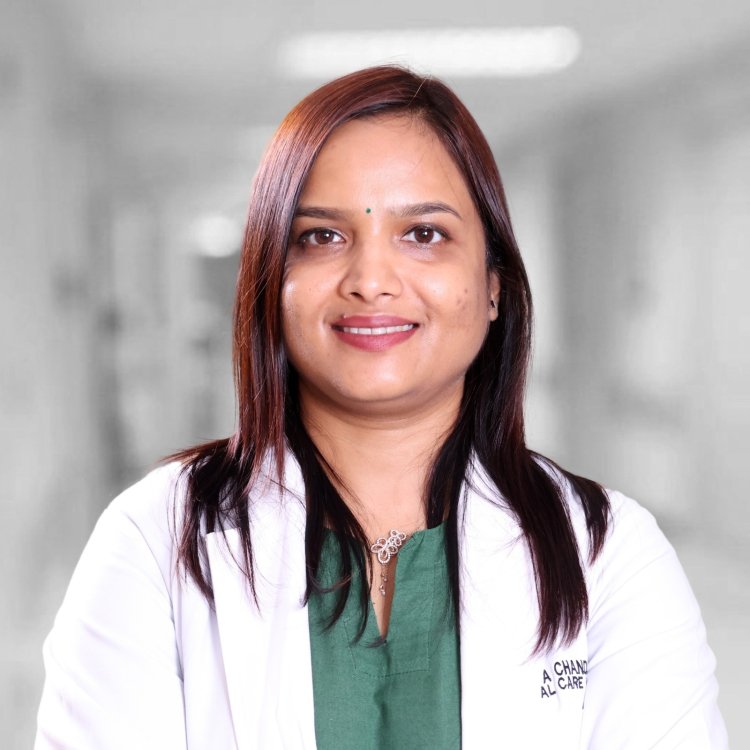
Dr. Shweta Ram Chandankhede
Senior Consultant & HOD – Critical Care Medicine
STAR Hospitals, Nanakramguda, Hyderabad
 Disclaimer: Welthi.com does not guarantee any specific results as a result of the procedures mentioned here, and the results may vary from person to person.